How to Get Your Website Cited by AI Chatbots like ChatGPT and AI Search in Dubai and across the UAE (2026 Guide)


To get a new website cited by AI chatbots and search engines like ChatGPT, Perplexity, Gemini and Google AI Overviews, five things must work together: a crawlable technical build that allows AI bots, a clean accessible design, content written as direct answers, structured data with clear trust signals, and strong rankings on both Google and Bing.
In the UAE this is still a first-mover advantage, because most local service brands are barely cited by AI today. Keep the content fresh, and you stay cited.
Buyers in Dubai are changing how they search. More of them open an AI chatbot like ChatGPT, Perplexity or Gemini, ask a full question, and act on the two or three sources the model names.
If your website is not one of those named sources, you are invisible at the moment a decision is made.
The shift is not small:
The answer, not the link, is becoming the destination. For a new website, that surface is still wide open. This guide is a practical playbook for earning citations across AI chatbots and AI search, built for a new Dubai site.
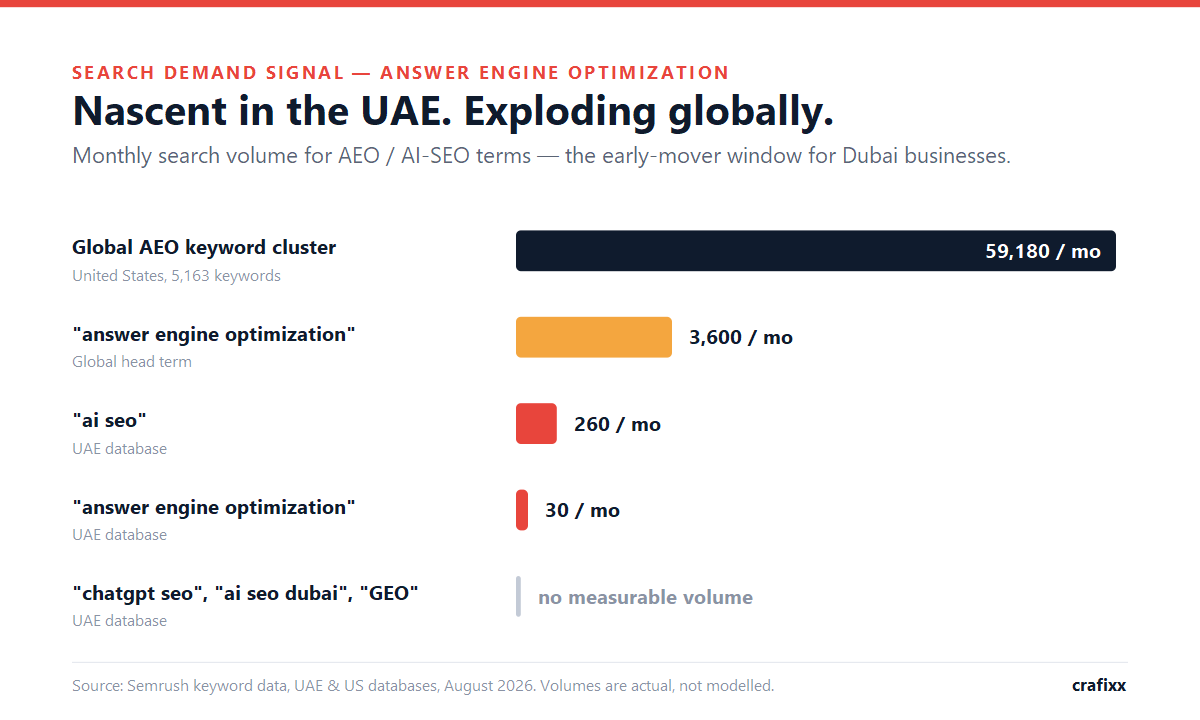
The AEO demand gap: nascent in the UAE, exploding globally. Source: Semrush keyword data, August 2026.
Answer engine optimization (AEO) is the practice of structuring your site so AI chatbots and answer engines can understand, trust and quote it as the direct answer to a question.
It is closely related to generative engine optimization (GEO) and LLM SEO. The terms are used interchangeably for the same goal: appearing inside AI answers.
In practice AEO does not replace SEO, it sits on top of it. A page has to rank to be retrieved, then be structured well enough to be quoted.
Being cited is becoming both more valuable and more contested.
The field is not crowded yet. A well structured new site can become a preferred source before the local market catches on.
The UAE ranks among the world's top ten countries for ChatGPT use relative to its internet population (World Bank).
Your audience is already asking AI chatbots the questions your service answers. Being cited is a direct commercial advantage, not a future bet.
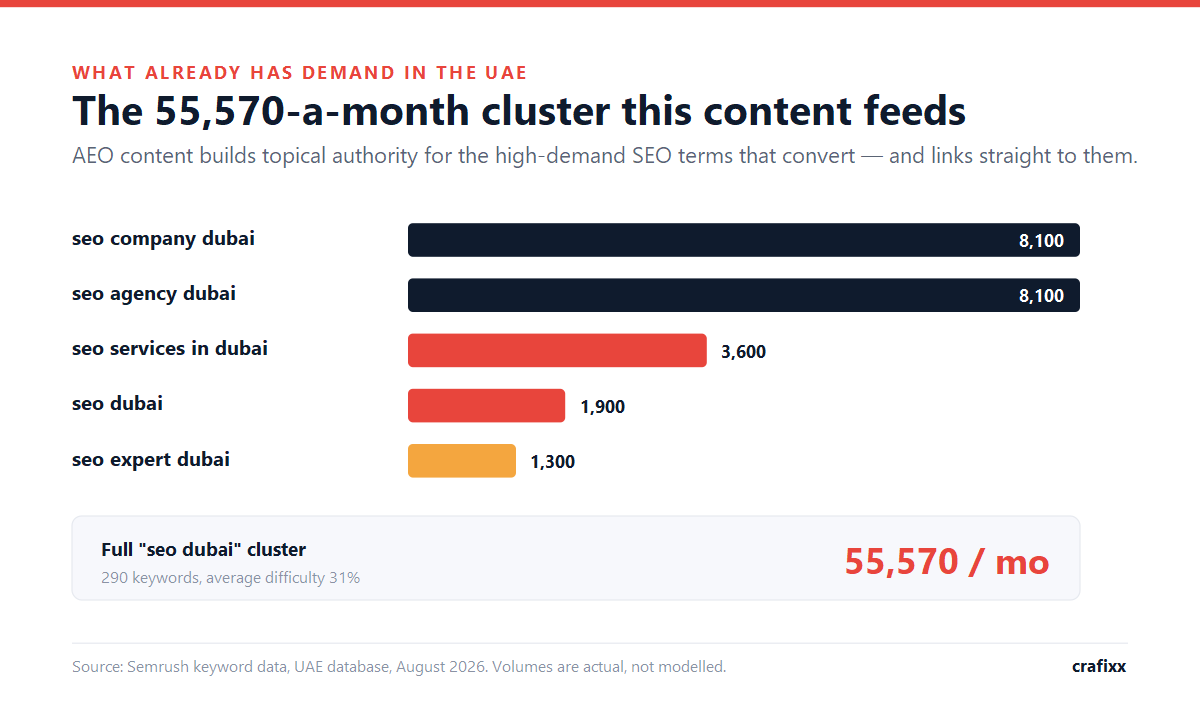
The UAE search demand this content supports: a 55,570-a-month SEO cluster. Source: Semrush, August 2026.
AI engines do not read the whole web live. They retrieve from search indexes, then answer from the sources they trust.
If you do not rank on Google and Bing, your odds of being retrieved drop sharply.
Once retrieved, three things decide whether a page gets quoted:
Miss any one and you get read, but not cited.
Getting cited is not one tactic. It is five disciplines working together, and each maps to a part of how a site is built and marketed.
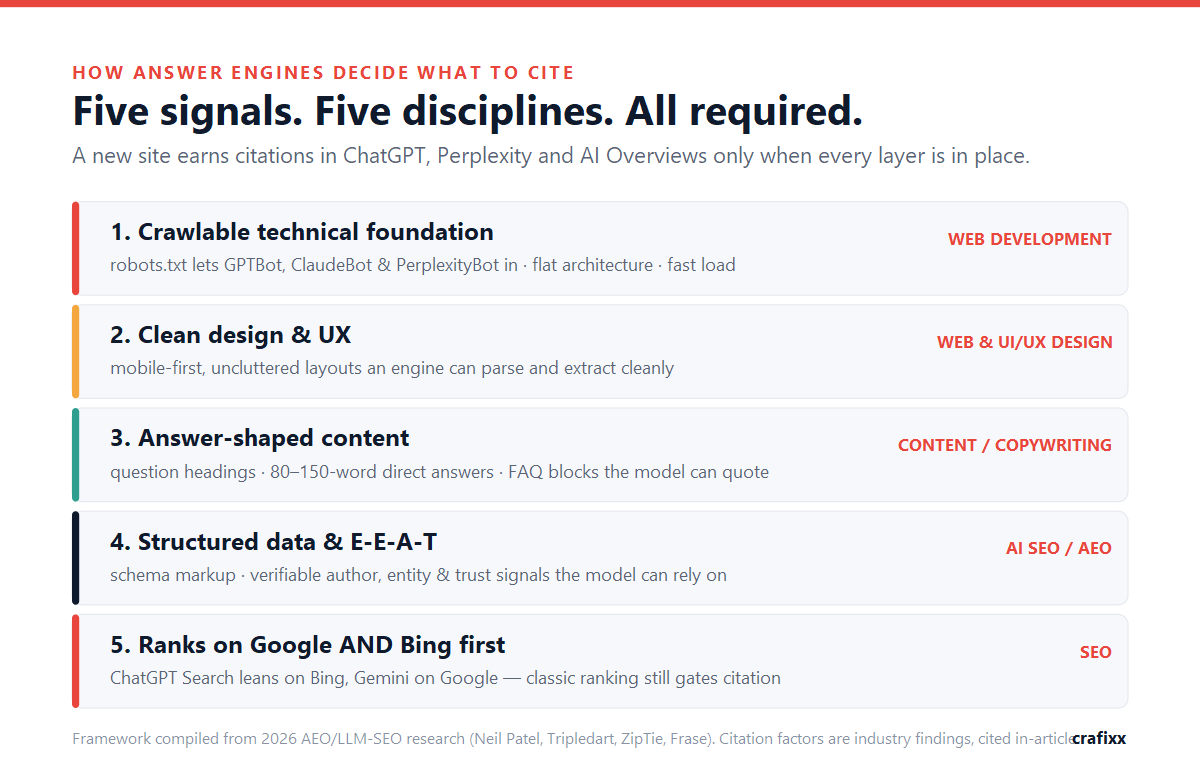
The five signals, mapped to the disciplines behind each one.
If AI crawlers cannot reach your pages, nothing else matters.
This is a web development decision, made when the site is built. Retrofitting a crawlable structure later is far harder than getting it right from the start.
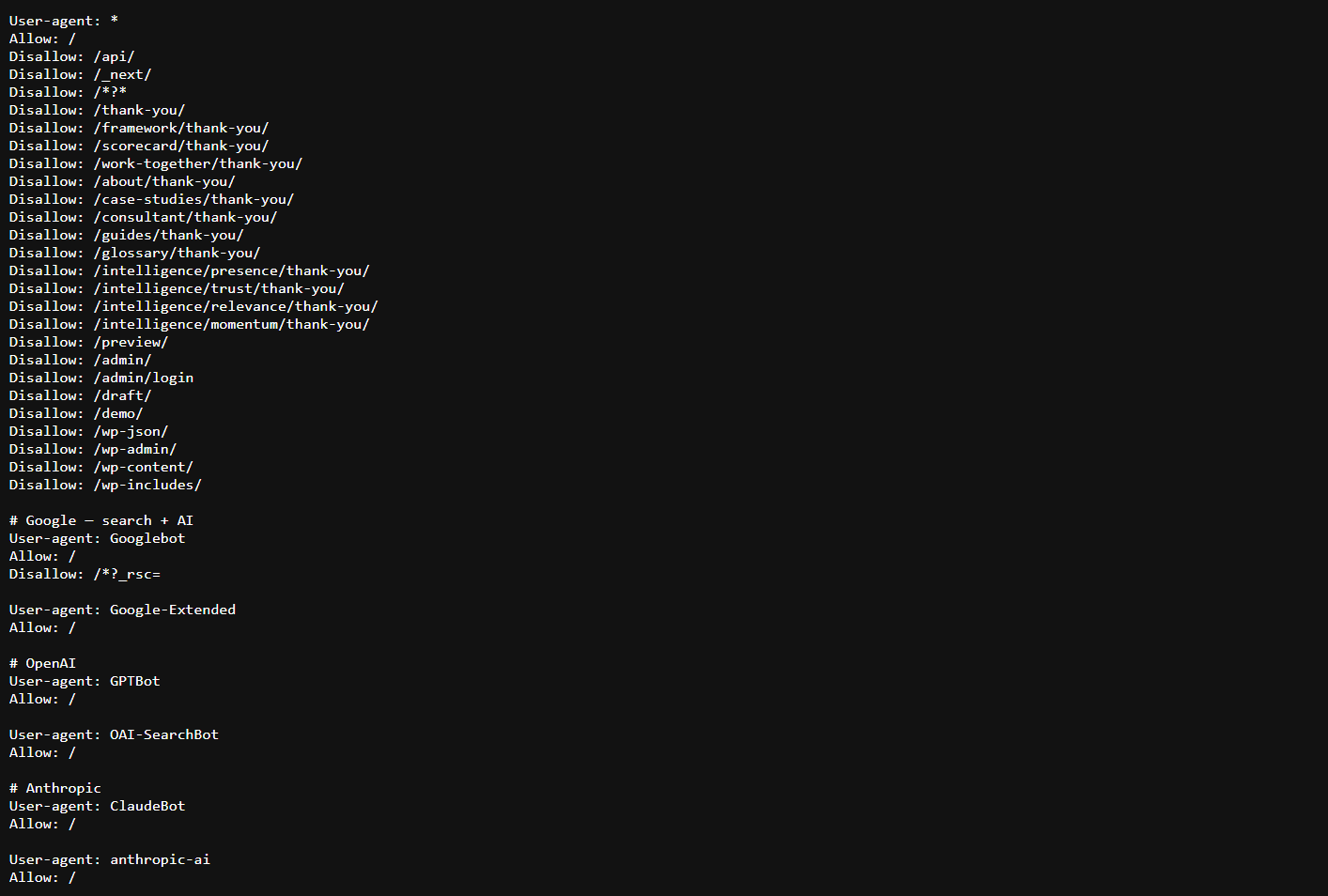
Answer engines extract text, so a cluttered, image heavy layout works against you.
Here, strong web design and UI/UX are machine readability, not decoration. A clear visual hierarchy is also a clear hierarchy for a model to follow.
This is the highest leverage layer.
For example, under a heading like How much does a website cost in Dubai, open with a direct price range in the first line, then explain what changes it. A model can lift that opening line as the answer, with your brand attached.
Structured data gives a model context it would otherwise have to infer.
On a Crafixx built site, schema is handled at the platform level, so the focus stays on the trust signals around it. Structuring content and signals for citation is the core of AI SEO.
Because retrieval starts from search indexes, classic SEO still gates AI citation.
This is where classic SEO and AEO meet: the same rankings that win clicks also decide whether AI can find you at all.
One more signal decides close calls, and most sites ignore it: freshness.
So a new site has a real opening, and it closes if the content goes stale.
Engines lean different ways. ChatGPT favours established authority, while Perplexity favours fresh, frequently discussed pages.
How you write matters, and so does the format you choose. Some page types map naturally to how AI answers a question, and they earn citations because of it.
For a Dubai service business, the practical move is to turn key topics into comparison pages, ranked guides and FAQ rich service pages, not only long prose.
AI engines weigh signals from beyond your own website. Where you appear elsewhere helps decide whether you are trusted enough to cite.
This off site work runs alongside on page AEO, and it is a core part of a modern digital marketing and AI SEO programme.
Most AEO advice is written for a generic Western market. The UAE is different.
This matters more now that citations drive clicks. After ChatGPT made brand links clickable in May 2026, referral traffic to those brands jumped 157.7 percent week on week (Similarweb).
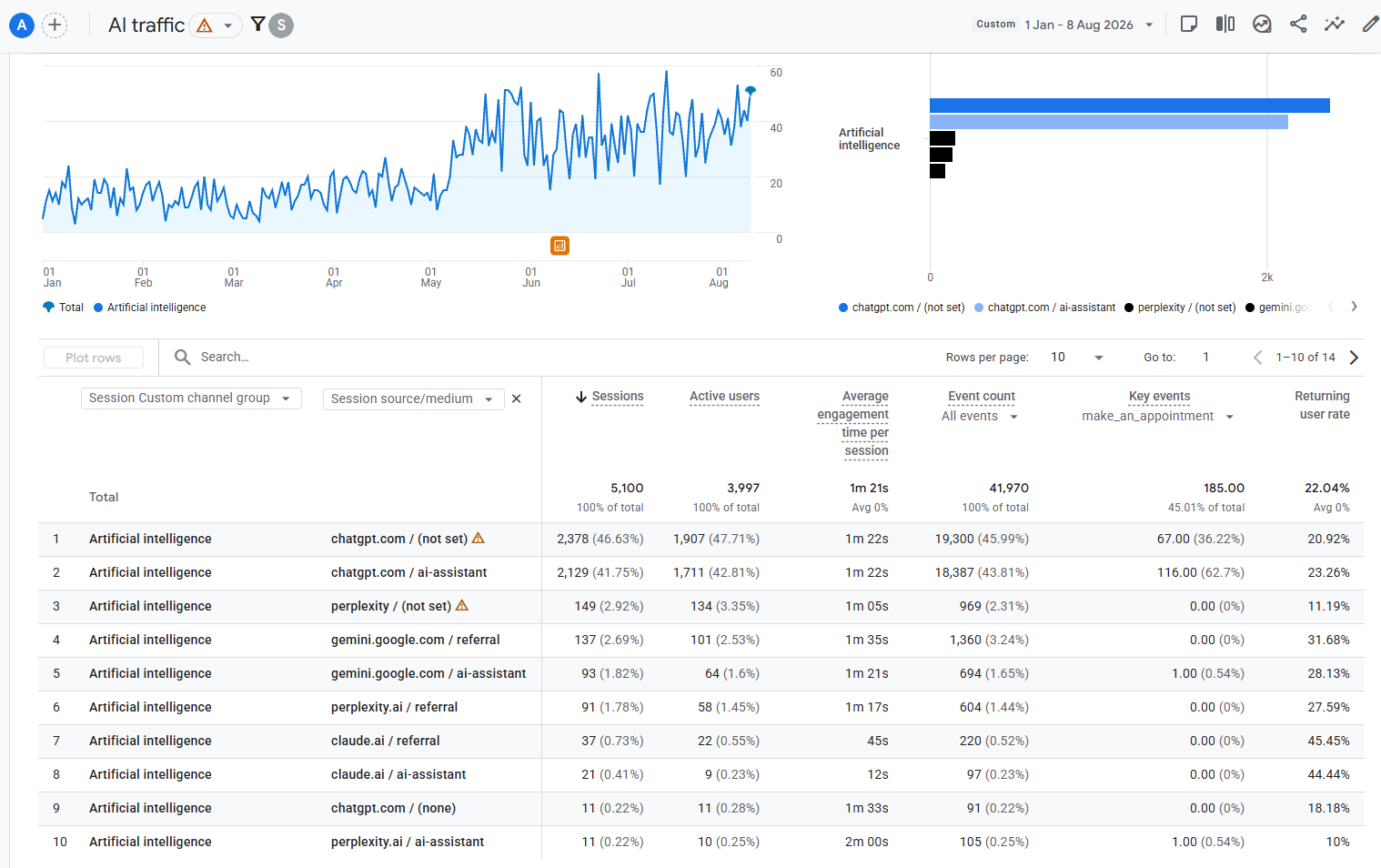
You cannot track AI citations like keyword rankings. Use a different toolkit:
We use cookies to help you navigate efficiently and perform certain functions. You will find detailed information about all cookies under each consent category below.
The cookies that are categorised as "Necessary" are stored on your browser as they are essential for enabling the basic functionalities of the site.
We also use third-party cookies that help us analyse how you use this website, store your preferences, and provide the content and advertisements that are relevant to you. These cookies will only be stored in your browser with your prior consent.
You can choose to enable or disable some or all of these cookies but disabling some of them may affect your browsing experience.

for opt the service.
Our represntative will join this meeting on given time.